Case
InstemUX
The Figma library behind Instem’s design system.
Project
Instem
Product Designer
Ongoing
Product Design
Preview
Overview
The brief
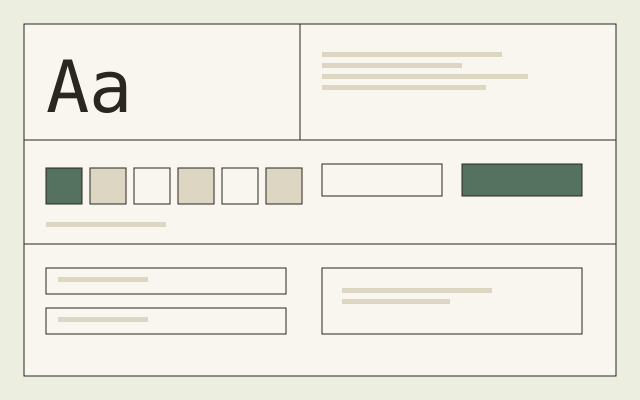
A growing product suite with no shared source of truth. InstemUX put every product on one visual language.
I built it piece by piece (tokens, variants, docs) and supported the teams adopting it, so it grew with the products.
The challenge
What was in the way
Instem’s product suite had grown product by product, each one solving its own problem well and looking like nobody had agreed on anything:
- Every product had drifted its own colours, spacing and component conventions, so nothing looked like part of one suite.
- Teams rebuilt the same components slightly differently each time, which cost design and engineering effort neither had to spare.
- A design system built once and left alone decays the moment the products it serves keep moving, so this one had to be built to grow rather than to be finished.
The approach
How we got there
-
Tokens before components
Colour, type and spacing decided first, as the foundation every component would draw from, rather than styling each component on its own terms.
-
Build from what teams already needed
Components built against real screens from the products already shipping, not a speculative library of everything a design system might one day need.
-
Document for the team that didn’t build it
Usage guidance written for the designer or engineer adopting a component cold, since a system nobody can use without asking is a system nobody uses.
-
Stay with the teams adopting it
Support didn’t stop at the library. I worked with product teams through their own adoption, since that is where a system actually earns or loses trust.
The outcome
What shipped
A shared visual language that Centrus, Centrus Insights and the rest of the suite now build on, rather than each product inventing its own.
InstemUX is live and still growing with the products it serves. Instem’s client confidentiality means I can write about how it was built and adopted, but not show the library itself or publish outcome figures. This case study is about the system’s design, not a component catalogue.
Next
Get in touch